Ujigami | Top Smart Factory Solutions Provider 2024

Ujigami


Empowering Smart Factories with Real-Time Control

Share this Article:

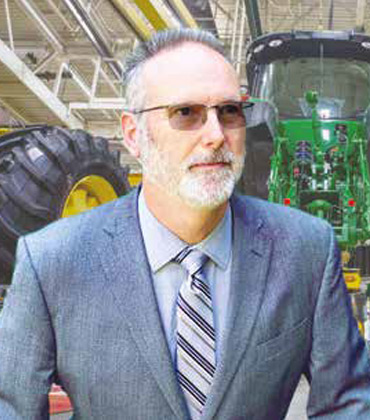
Edward Dickson, Ujigami | Manufacturing Tech Insights | Top Smart Factory Solutions Providers Edward Dickson, President
Ujigami is redefining the manufacturing landscape with its cutting-edge approach to smart factories, blending advanced digitalization with seamless interconnectivity. Led by President Edward Dickson, the company has become a crucial link between plant floor machinery and top-level software systems. Through its Advanced Manufacturing Intelligence (AMI) platform, Ujigami enables manufacturers to move beyond traditional methods, providing the automation and real-time control needed to transform conventional factories into highly efficient smart operations.

At the heart of Ujigami’s offering is its ability to eliminate paper-based processes and enable seamless communication between machines, operators, and systems. Its technology functions as an essential middle layer, connecting devices on the factory floor with manufacturing resource planning (MRP) systems. This connectivity allows manufacturers to operate entirely digitally, tracking inventory, monitoring and controlling machines, and maintaining visibility across every stage of production.

“Ujigami software provides real-time insights and active controls that ensure machines are running correctly and inventory is flowing smoothly-proactively identifying and resolving potential issues before they become costly delays, rework and scrap,” says Dickson.

Beyond simple connectivity, Ujigami drives autonomy in manufacturing, reducing reliance on human oversight.

While continuously evaluating machine conditions and production processes, it automatically makes necessary adjustments to ensure products meet specifications. This adaptability allows manufacturers to be more flexible, enabling production runs with batch sizes as small as one-a level of customization previously unheard of in traditional manufacturing.

A unique feature of Ujigami’s system is its empowerment of factory operators. By providing operators with real-time feedback and device control, Ujigami helps them perform tasks more effectively and with greater confidence. The system functions like a virtual supervisor, offering continuous guidance to set up operators for success. This reduces errors, alleviates stress, and fosters a supportive work environment where operators can focus on their tasks with precision.


Ujigami software provides real-time insights and active controls that ensure machines are running correctly and inventory is flowing smoothly-proactively identifying and resolving potential issues before they become costly delays, rework and scrap


One of the most striking examples of Ujigami’s impact is its collaboration with Ground Effects, a tier-one post-processor for OEM vehicles. Specializing in spray-in bedliners for pickup trucks, Ground Effects sought to transition from a primarily paper-based system to Ujigami’s fully digital platform. Currently converting 28 plants, Ground Effects now manages everything from the digital receipt of customer-owned vehicles to the monitoring of automated equipment on the plant floor. This digital transformation has significantly improved productivity and turnaround time, enabling Ground Effects to deliver vehicles more quickly to dealerships and end consumers.

By offering manufacturers a comprehensive solution that combines real-time monitoring, automation, control and intelligent decision-making, Ujigami is paving the way for a new era of smart factories. Its innovative approach ensures that manufacturers are not only connected but also equipped with the tools to optimize operations, drive efficiency, and remain competitive in an increasingly digital world.
Deep Dive

Manufacturing Intelligence Solutions: Turning Data Into Factory-Wide Coordination

Manufacturing leaders have spent years investing in connected equipment, industrial sensors and automation technologies. Yet many facilities still struggle to translate those investments into consistent plant-wide performance. Data often remains trapped within individual machines, production cells or software applications, creating islands of visibility rather than a coordinated manufacturing environment. The challenge is no longer collecting information. It is turning that information into timely decisions that support quality, throughput and responsiveness without adding complexity for operators. Manufacturing intelligence solutions have emerged as a response to this gap. Their value lies in their ability to connect production assets, interpret real-time conditions and coordinate actions across the factory. Buyers evaluating these platforms should look beyond dashboards and reporting functions. The strongest solutions act as a decision layer between equipment, people and production objectives, ensuring that information leads directly to action. A meaningful solution should be able to work across a mix of modern and legacy equipment. Many manufacturers operate facilities that contain assets from different generations, making wholesale replacement impractical. Intelligence platforms that can integrate diverse devices, collect information from multiple sources and create a common process framework provide a faster path to value. This capability becomes increasingly important as more sensors, monitoring technologies and connected devices enter the manufacturing environment. Another consideration is the ability to maintain process control while supporting product quality requirements. Manufacturing conditions change continuously, and not every production step can be verified automatically. Effective platforms help enforce validation activities, inspection requirements and process checks while maintaining traceability. This creates greater confidence that deviations are identified quickly and contained before they affect downstream production or customer deliveries. Ease of adoption also separates successful implementations from disappointing ones. Many digital manufacturing initiatives fail because they demand extensive programming expertise or place additional burdens on plant personnel. Systems that simplify configuration, automate technical tasks and guide users through process creation allow manufacturers to focus on improvement rather than software management. The objective should be to reduce the effort required to manage production while increasing the quality of decisions being made throughout the facility. When these capabilities come together, the impact extends beyond technology. Manufacturers often experience lower inventory accumulation, improved production flow and greater confidence in daily execution. Teams spend less time reacting to uncertainty and more time addressing measurable issues. This shift also improves how managers allocate labor, respond to constraints and protect delivery schedules when demand changes. The result is a factory environment that operates with greater predictability, visibility and coordination. Among providers in this space, Ujigami stands out as a compelling choice for manufacturers pursuing factory-wide intelligence. Its approach centers on serving as the logic layer that connects equipment, sensors and production processes into a coordinated system. The platform enables manufacturers to create smart manufacturing workflows without extensive programming while maintaining real-time visibility into production activity. It supports process enforcement, quality validation and integration across diverse equipment environments. Its ability to direct manufacturing actions, coordinate automated systems and simplify adoption aligns closely with the qualities that distinguish leading manufacturing intelligence solutions. For organizations seeking greater control, improved quality assurance and more efficient production execution, Ujigami represents a strong recommendation. ...Read more
Top 10 Smart Factory Solutions Providers - 2024

Company
Ujigami

Management
Edward Dickson, President

Description
Ujigami is redefining the manufacturing landscape with its cutting-edge approach to smart factories, combining advanced digitalization with seamless interconnectivity. Led by President Edward Dickson, the company has emerged as a critical link between plant floor machinery and top-level software systems.